
A different way to understand imposter syndrome
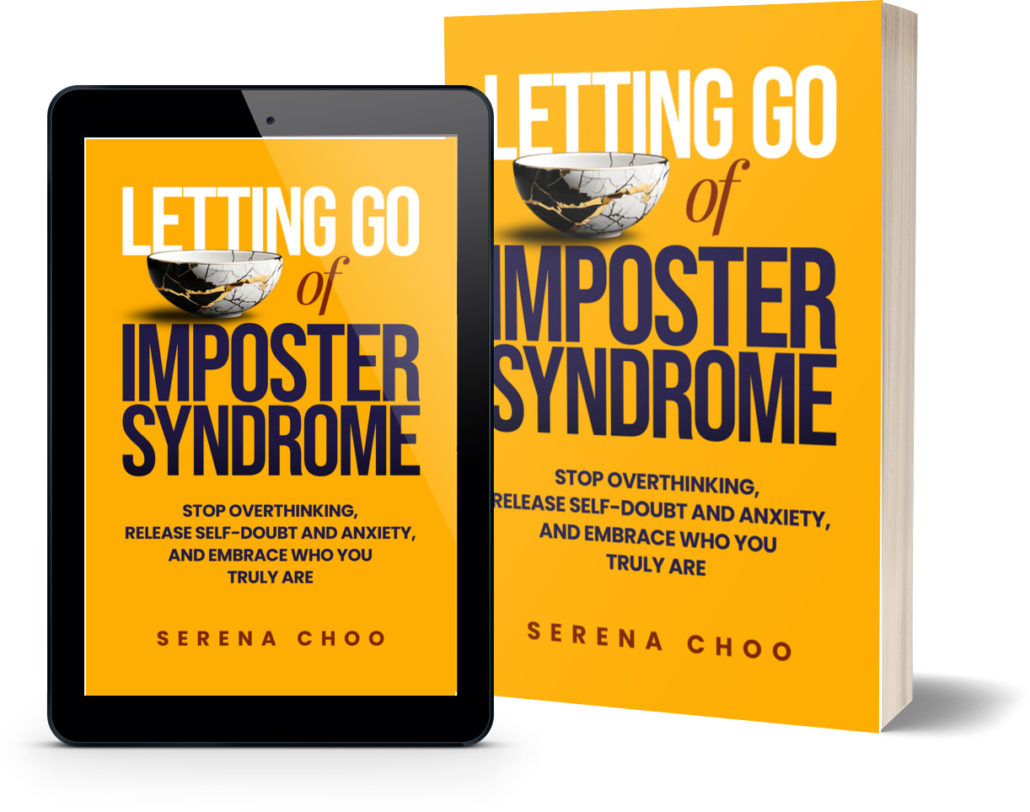
Letting Go of Imposter Syndrome
Stop Overthinking, Release Self-Doubt and Anxiety, and Embrace Who You Truly Are
Imposter syndrome isn’t a personal flaw… and it isn’t something that needs fixing.
It’s a pattern of thinking that pulls you into self-doubt, overanalysis, and second-guessing, even when you’re capable, experienced, and doing well.
Letting Go of Imposter Syndrome offers a grounded, compassionate way to understand why imposter thoughts feel so convincing and why they don’t have to run your life.
If you’ve ever felt like you’re not enough — no matter how much you’ve achieved — you’re not alone.
Many people with imposter syndrome are thoughtful, conscientious, and capable. Yet internally, they feel tense, uncertain, or quietly afraid of being “found out.”
This book is written for those who are tired of fighting their mind and ready for a calmer, clearer way forward.
What Readers are Saying
Who This Book is For
Letting Go of Imposter Syndrome is for you if:
• You’re capable, thoughtful, and often hard on yourself
• You struggle with self-doubt despite external success
• You want relief from overthinking without hype or pressure
• You value clarity over motivation
• You’re tired of “fixing” yourself
It’s especially helpful for professionals, creatives, and reflective people who sense there must be an easier way to live with their mind.
How This Book is Different
Many books on imposter syndrome focus on changing what you think.
This one focuses on seeing how thinking works.
You’ll explore:
- Why imposter thoughts arise in the first place
- How overthinking amplifies self-doubt and anxiety
- Why trying to “fix” yourself often keeps the cycle going
- How awareness — not effort — creates lasting change
The approach is practical, realistic, and deeply human. No forced positivity. No pressure to become someone else.
A Practical, Guided Experience
23 Practical Exercises
Understanding the Psychology
Grounded Self-Trust
Letting Go of Imposter Syndrome can be thought of as a workshop in book form.
Through clear explanations, real-world examples, and 23 guided reflections and exercises, you’re gently invited to engage with your own experience — not to analyse it, but to understand it more clearly.
As that understanding deepens, imposter feelings often begin to loosen on their own. Confidence stops being something you chase and becomes something you experience.
What you’ll discover inside
As you move through the book, you’ll learn how to:
• Recognise when imposter thinking is running the show
• Step out of mental spirals without suppressing your thoughts
• Create distance from self-criticism and comparison
• Feel steadier and more grounded in everyday situations
• Reconnect with a quieter, more authentic sense of self-trust
The shift isn’t about becoming more confident; it’s about recognising and accepting who you already are, so the need to prove yourself quietly falls away.
A grounded, compassionate approach
This book doesn’t ask you to push through fear or silence your doubts.
Instead, it helps you see that:
• Thoughts are not facts
• Feelings don’t define your worth
• Confidence doesn’t need to be built or performed
• You don’t need to earn your place
As your relationship with your mind changes, the grip of imposter syndrome naturally softens.
Already Read the Book? Nice one
If Letting Go of Imposter Syndrome has been helpful for you, I’d love for you to share your reflections. It helps other readers know if the book is right for them too.
Your review makes a real difference.
Click the button below for your local Amazon marketplace.
The Root of the Challenge
What is Letting Go of Imposter Syndrome really about?
This book is about understanding self-doubt at its root, not as a flaw or weakness, but as a learned pattern of thinking shaped by conditioning. It is an invitation to move from the noise of the “inner critic” into a state of conscious awareness.
Rather than helping readers “build confidence,” the book explores how confidence and self-trust naturally emerge, through understanding how patterns of thought were created in the first place, and why they persist. It offers a clearer relationship with thought, identity, and self-judgment, allowing imposter feelings to soften rather than be fought.
What is imposter syndrome, and why does it persist even when I’m capable?
Imposter syndrome is not a lack of ability or confidence, but a pattern of thinking shaped by learned ideas about who we think we are or need to be.
Because these patterns operate quietly in the background, external success rarely resolves them. Achievements may bring temporary relief, but the underlying doubt often returns, especially in new or unfamiliar situations.
This book explores why imposter feelings persist even in capable, intelligent people, and how they begin to soften when the conditioning that shaped them is seen for what it is.
Do I need to be struggling badly with imposter syndrome to benefit from this book?
No. Many readers don’t consciously identify with the term “imposter syndrome,” but recognise patterns such as:
* feeling not quite good enough
* needing to prove competence
* downplaying success
* fearing being “found out”.
The book speaks to these everyday experiences, whether they are intense or subtle.
How is this book different from other imposter syndrome books?
Most books on imposter syndrome focus on strategies: reframing thoughts, collecting evidence, or changing behaviour.
While those approaches can be helpful, this book goes deeper. It explores how imposter feelings arise in the first place — through conditioning and identification with thought — and how they begin to lose their grip when seen more clearly.
The emphasis is not on managing self-doubt, but on understanding it in a way that reduces its power altogether.
The Path to Clarity
Is this book based on psychology, coaching, or something else?
The book draws on psychology and coaching, but it is not a clinical manual.
It is informed by Serena Choo’s 25+ years of experience in executive and personal transformation coaching, as well as her own lived experience of self-doubt and imposter feelings. Underneath the practical framing is a deeper awareness-based perspective that looks at how identity and thought operate.
What kind of change can I expect from reading this book?
Readers often describe:
* feeling less ruled by self-doubt
* a calmer inner dialogue
* greater self-trust
* less need to prove or protect themselves.
The change is usually subtle but lasting; a shift in how they relate to their thoughts and sense of self, rather than a dramatic personality transformation.
Practical Guidance
Does this book offer practical tools or exercises?
Yes. The book includes short reflections and simple exercises designed to support insight and self-awareness. These are not techniques to “fix” yourself, but invitations to notice patterns of thinking and self-judgment as they arise. Many readers find that this noticing alone creates a more stable sense of confidence and ease over time.
Are there worksheets for the exercises in the book?
Yes.
For readers who find it helpful to work things through on paper, downloadable worksheets are available for all 23 exercises in the book.
For those who don’t want to download individual sheets, the exercises are also available as a companion workbook, bringing all the worksheets together in one place.
Who is this book for?
This book is especially relevant for:
* professionals and high achievers
* people who overthink or second-guess themselves
* those who feel capable on the outside but unsure on the inside
* readers who are tired of trying to “fix” their confidence.
Many readers come to the book after years of personal development, coaching, or therapy, sensing that while these helped, something still felt unresolved.
Is this book similar to The Monkey and The Way of Zen?
The two books share a common foundation — a shift in perspective rather than self-improvement; but they are written in very different forms.
Letting Go of Imposter Syndrome is more direct and practical, using clear language and structured reflection. The Monkey and The Way of Zen explores similar territory through story and metaphor.
Some readers start with one and later find themselves drawn to the other.
Can insight alone really reduce self-doubt?
For many readers, insight is more powerful than effort.
Rather than just trying to replace negative thoughts with positive ones, the book invites a clearer understanding of how thoughts function and how identity becomes entangled with them. When this is seen, self-doubt often loses its authority without needing to be actively challenged.
This shift doesn’t require constant vigilance or mental discipline; it emerges naturally as awareness grows.
More From Serena Choo
If you’re drawn to a gentler way of finding calm and clarity, The Monkey and The Way of Zen offers a more story-led exploration.
Through short, Zen-inspired parables, it follows a restless mind learning to settle, not through effort or instruction, but through moments of quiet recognition. The stories invite a softer relationship with overthinking and self-doubt, and an easier way of meeting everyday life.

Serena Seen and Heard
Are You Good Enough to Be an Author? What to Do When You Feel Like a Fake with Melody-Ann of Author Nation
MASTERMIND GROUP SERIES: Women’s Leadership “Imposter Syndrome” with the CFO Leadership Council