
A gentle story about a restless mind learning to settle, without effort or fixing
The Monkey and The Way of Zen
A Transformational Journey in 28 Short Stories—Embrace Mindfulness, Overcome Overthinking, Let Go, and Find Inner Peace and Happiness
For those who…
… overthink and feel tethered by constant effort
… are ready to soften the search for “missing pieces”
… and glimpse the calm they’re looking for where it already exists.
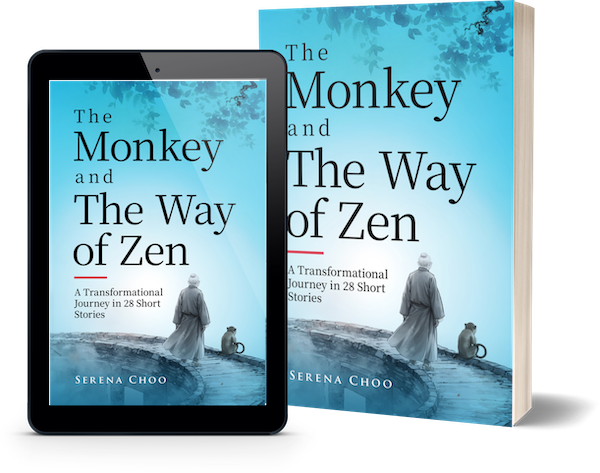
There is a part of us that never seems to stop thinking.
It plans, worries, analyses, and tries to make life feel safer by staying one step ahead.
In The Monkey and The Way of Zen, that part of the mind is imagined as a small, curious monkey — always searching, always swinging from one thought to the next, and slowly discovering that peace does not come from trying to control thoughts, but from seeing things in a new way.
Through 28 short stories, the Monkey meets a quiet Master and begins to notice something unexpected: the mind does not need to be fixed, controlled, or silenced in order for calm to appear.
What This Book Offers
This book is not a program or a practice.
It is a series of stories meant to be lived with.
Each story invites a small shift in how you relate to thought, easing overthinking, self-doubt, and emotional strain.
Readers often describe the experience as:
* calming
* clarifying
* quietly comforting
* and surprisingly freeing…
not because life suddenly changes, but because their relationship with their thoughts begins to soften.
A Different Way of Meeting the Mind
Rather than teaching techniques or giving advice, the stories invite a more compassionate and curious relationship with the mind itself.
The Monkey’s restlessness is not treated as a problem to solve, but as something to be understood with humour and kindness.
Less effort, less struggle, and more natural ease without needing meditation, belief, discipline, or self-fixing.
Who this Book is For
This book is designed for adults who are caught in cycles of overthinking, feeling mentally tired or emotionally stretched, or navigating burnout or anxiety.
It is particularly helpful for “high achievers” who find themselves caught with a loud inner critic, imposter syndrome, or self-doubt, and want a gentle, non-prescriptive way to calm the mind.
It resonates especially with anxious or reflective minds, and readers who enjoy reflective or allegorical stories.
You don’t need to be interested in Zen or spirituality to enjoy it.
A Gentle Companion to Reflection
The stories are written for everyday life and don’t rely on any belief system. Some readers familiar with contemplative traditions notice themes that feel familiar — but the focus remains on a quieter way of relating to your thoughts. A free companion guide — The Monkey’s Zen Companion — is available if you’re curious about those inspirations.
How to Read This Book
Some readers enjoy reading one story a day, as a quiet pause in a busy life.
Others read the book straight through like a short philosophical fable.
There is no right way to read it.
The stories are meant to be returned to — not studied, but noticed — allowing insight to arise naturally over time.
Book Club Discussion Guide Download
Enjoyed the Book? Share Your Thoughts!
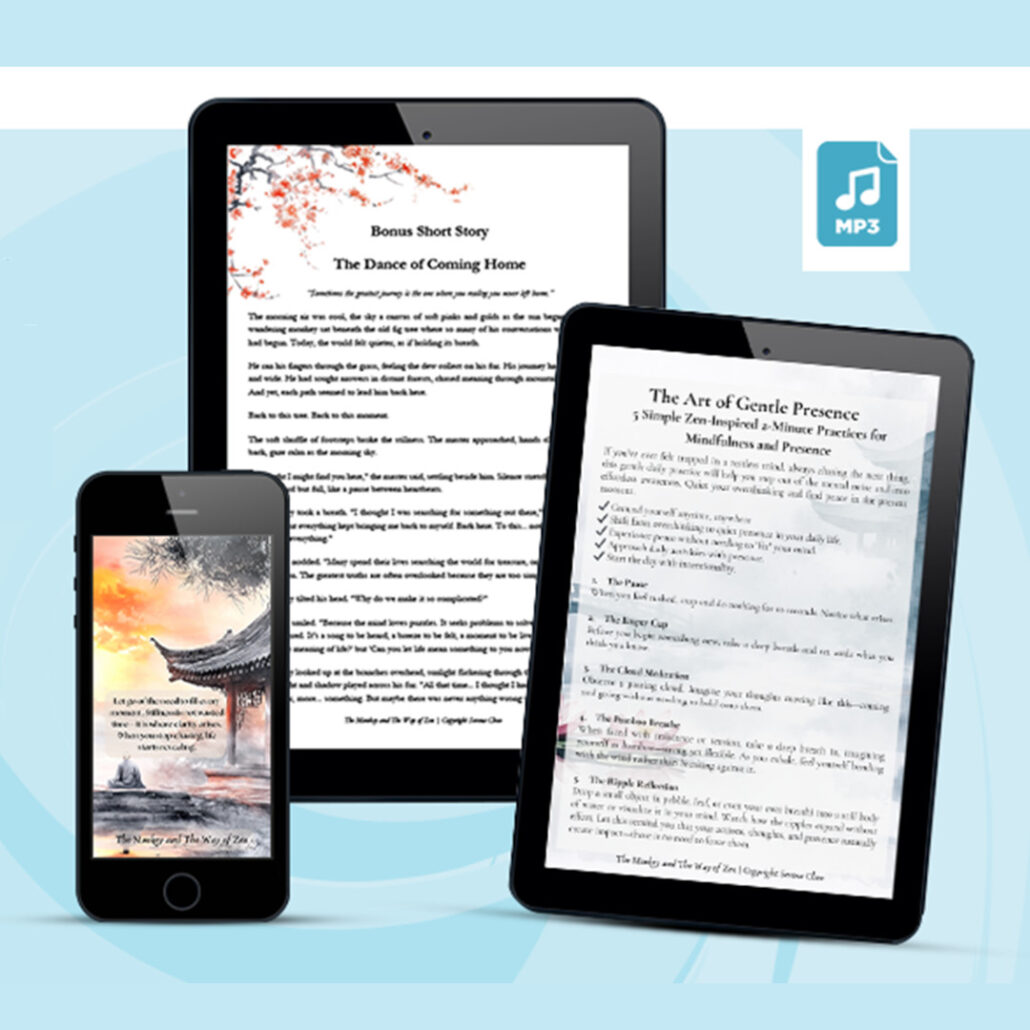
Exclusive companion materials included
The Heart of the Story
What is the main message of The Monkey and The Way of Zen?
The book suggests that inner peace isn’t about fixing your thoughts or changing your life but about how you relate to what’s already happening in your mind and day-to-day life. Many readers notice relief and calm simply by seeing that differently.
What does the “Monkey” or “Monkey Mind” represent in Serena Choo’s book?
The Monkey — often referred to as the “monkey mind” — represents the restless, analytical part of the mind that swings between worries, plans, and “what ifs.” Rather than being something to silence or overcome, the Monkey is portrayed with warmth and humour. It reflects our very human tendency to seek certainty and control in an unpredictable world. Through storytelling, the book invites readers to see this restlessness with compassion rather than resistance. As that relationship with the mind softens, a quieter and more peaceful inner state often begins to emerge naturally, not by force, but through understanding.
Why use story instead of teachings?
Stories allow insight to be felt rather than explained. They bring into everyday human situations — moments of worry, doubt, effort, and discovery that feel familiar and alive – and rather than telling the reader what to think or believe, the Monkey’s journey invites recognition. The meaning emerges naturally through the characters and their experiences, not by giving answers, but by shifting how we see. In this way, storytelling offers understanding without instruction and depth without dogma.
How does this book compare to The Alchemist or The Boy, the Mole, the Fox and the Horse?
Like those works, The Monkey and The Way of Zen uses simple, allegorical storytelling to explore deep emotional truths. It shares a similar sense of quiet wisdom and gentleness, making it a calm companion for readers who enjoy philosophical fables and reflective stories.
The Reading Experience
Is this a self-help book?
No. It’s not about techniques, exercises, or step-by-step programs. The stories invite a different way of relating to your thoughts, so calm and clarity arise naturally as you read.
What makes this book different from other mindfulness or anxiety books?
Instead of teaching tools or instructions, this book uses stories to help you notice your thinking differently — a shift many readers find brings ease without effort. Readers familiar with Buddhist or Zen teachings often recognise this approach and describe the stories as a fresh way of meeting insights they already know, without formal language or doctrine.
Do I need to meditate to benefit from this book?
No. The book doesn’t require meditation or any specific practice. Simply reading and reflecting on the stories is often enough to create a gentler relationship with your own mind.
Is this book suitable for busy or stressed lives?
Yes. The stories are brief and written in simple, clear language. Each one offers a small insight into overthinking, letting go, self-doubt, and inner peace. They can be read in order or dipped into one at a time, making the book easy to return to whenever you need a moment of calm. Many readers enjoy reading one story a day as a quiet pause in an otherwise busy life.
Roots and Reflections
Is this book spiritual or religious?
No. Although inspired by Zen, the book is not religious and does not promote any belief system. It focuses on universal human experience and offers insights that can be appreciated regardless of background or worldview.
Is this book about awakening or enlightenment?
Not explicitly. The book focuses on small shifts in perspective that bring more ease into everyday life. For some readers — including those familiar with Buddhist or contemplative traditions — these shifts may echo deeper insights about the nature of mind and experience. But the stories are designed to be lived with simply, without needing to frame them in spiritual or philosophical terms.
Is there additional material for readers who want to explore the Zen background of the stories?
Yes. Readers who are curious about the Zen influences behind the parables can access a free bonus guide called The Monkey’s Zen Companion. It offers short reflections on how each story connects with classic Zen themes, while keeping the focus on lived understanding rather than doctrine.
You Might Also Like
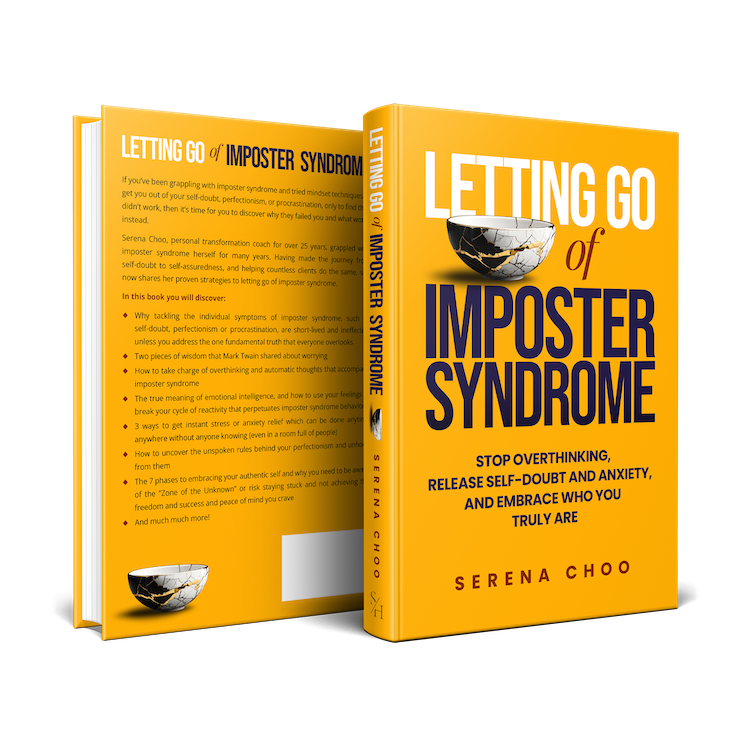
For some readers, the Monkey’s stories open a door.
For others, what’s needed is something more grounded and explicit.
Letting Go of Imposter Syndrome explores self-doubt, confidence, and identity in a clear, practical way — without turning life into another self-improvement project. Rather than helping readers “build confidence,” the book invites a deeper understanding of where imposter feelings come from, and how they begin to soften when old conditioning is seen more clearly.
Rooted in awareness and lived experience, it offers reflections and exercises that support a steadier sense of self-trust, especially for those navigating professional pressure, overthinking, or the quiet feeling of never quite being enough.
Read more about Letting Go of Imposter Syndrome